Comparisons
Print, embroidery or engraving: how to apply a logo
Screen printing, embroidery, laser engraving, full-colour printing and embossing: which items each method suits and how to choose with three simple questions.
The same logo looks different on a mug, a hoodie and a metal bottle. The application method determines the look, how long the image lasts and the cost. Below are the five methods you will come across most often and the items each one suits.
Screen printing (silkscreen)
Ink is pressed through a mesh stencil. Each colour is printed separately, so the cost rises with the number of colours in the logo.
- Suits T-shirts, tote bags, paper bags and simple logos in 1–3 colours.
- For a small order, preparing the stencils can cost more than the printing itself.
Embroidery
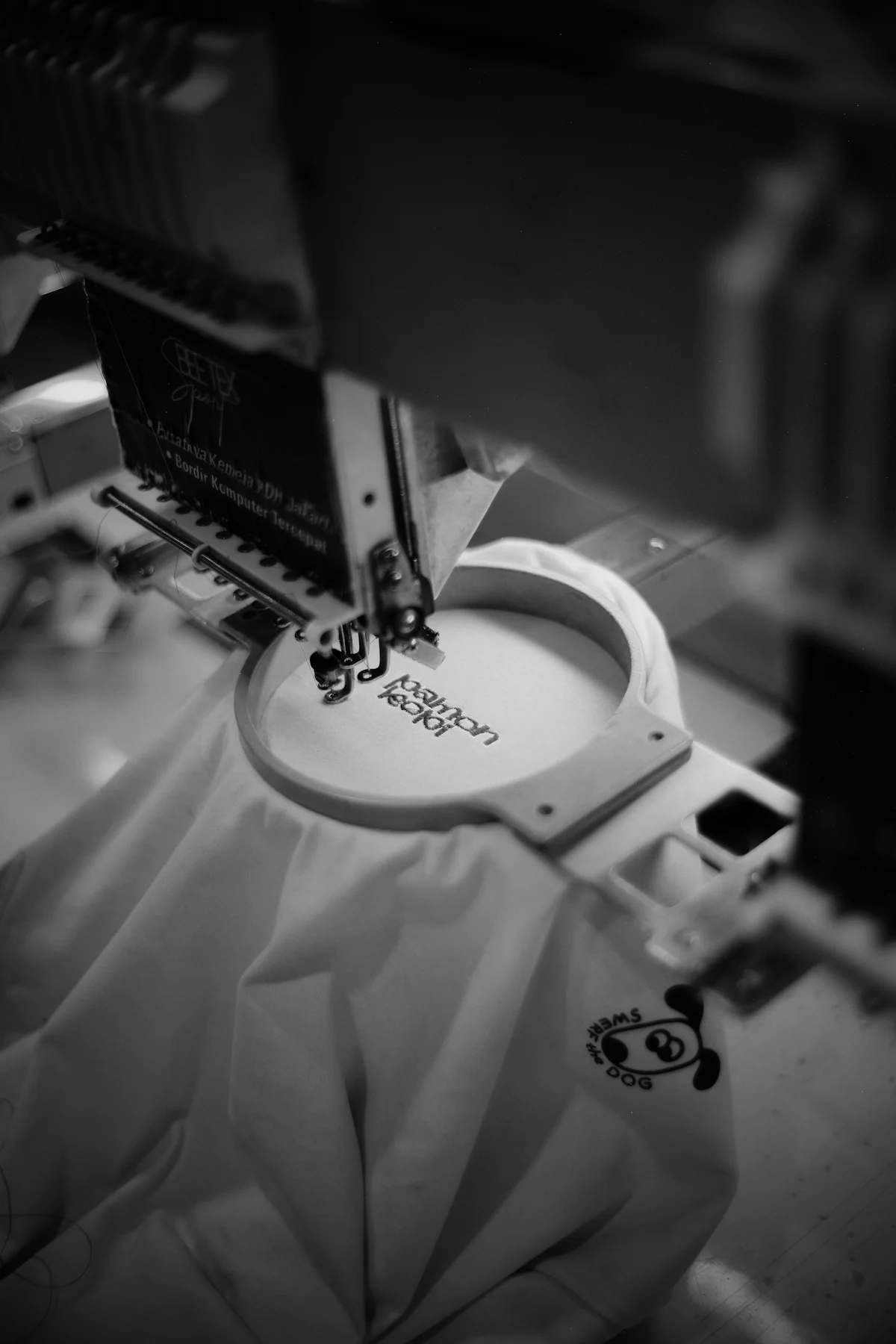
A machine stitches the logo in thread according to a program. The result has texture and stands up well to washing.
- Suits hoodies, caps, scarves and fleece items.
- Small letters and thin lines get lost, so logos are often simplified. The cost depends on the number of stitches, not colours.
Laser engraving
A laser burns away or removes the top layer of the material. There is no ink, so the image does not wear off.
- Suits metal, wood, leather, travel mugs and some types of plastic.
- Engraving is single-toned: the colour comes from the material itself, and the logo's brand colour cannot be reproduced.
Full-colour and UV printing
All the colours are printed at once, as on an ordinary printer, only on an object. This can reproduce gradients and photographs.
- Suits mugs, pens, power banks and other smooth surfaces.
- For tableware, ask whether the print is dishwasher-safe.
Embossing
The image is pressed in with a stamp, sometimes with foil. It looks understated and neat.
- Suits notebook covers, leather items and cards.
- It needs a die, so the method does not pay off for one or two copies.
How to choose with three questions
What is the item made of?
Fabric: embroidery or screen printing. Metal and wood: engraving. Ceramic and plastic: full-colour printing. Paper and leather: embossing.
How many colours are in the logo?
With one or two, almost any method will work. If the logo has a gradient, look at full-colour printing or ask a designer for a one-colour version.
How often will the item be washed or worn?
For clothing and tableware, durability matters more than cost. Ask the seller how the image holds up after washing.
Combining methods in one set
If a set contains several items, you can choose a method for each: embroidery on a scarf, engraving on a travel mug, embossing on a notebook. To keep the set looking unified, stick to one version of the logo and one or two brand colours. Engraving and embossing without foil do not reproduce colour, so it is best to keep the other items in the set in a restrained palette so that the difference does not stand out. Each method also has its own production time, and the whole set will only be ready when the slowest item is.
What to do next
Before ordering, ask for a digital proof showing the logo's position and size, and for a large order, a sample too. In catalogues such as the Brandit Christmas section, the application method is usually listed on the product page; confirm the exact terms with the seller.